
• Services
  • Attorneys
  • Media & Insights
  • Online Payment
  • Join Our Team
Results may vary depending on your particular facts and legal circumstances. No aspect of this advertisement has been approved by the Supreme Court of New Jersey. A description of the selection methodology can be found here.
  • Services
  • Attorneys
  • Media & Insights
  • About Us
  • Delivering Value
  • Diversity & Inclusion
  • Meritas
  • Contact Us
  • Online Payment
    A
    Alternative Dispute ResolutionAntitrust & Trade RegulationAppellate Practice
    B
    Banking & Financial ServicesBankruptcy, Creditors’ Rights, and Financial RestructuringBeer LawBusiness Law
    C
    Cannabis LawConstruction LawCooperative and Condominium Law (Co-op & Condo)Criminal Defense
    E
    Economic Development LawElder Care & Special Needs LawElectronic Discovery ("E-Discovery")Environmental LawERISA & Employee BenefitsEstate Planning and Administration & Wealth PreservationExecutive Compensation and Employment Strategies
    F
    Food, Beverage & HospitalityFranchise Law
    H
    Health Care & Life SciencesHealth Care ProvidersHigher EducationHospitals and Health Networks
    I
    ImmigrationInsurance CoverageIntellectual PropertyIntellectual Property Litigation, Arbitration, and Dispute ResolutionIntellectual Property Portfolio Strategy, Management & LicensingInternational BusinessInternet Law
    L
    Labor & EmploymentLiquor Law, Licensing, Manufacturing, and DistributionLitigation
    M
    Media Law & Creative Economy PracticeMergers & AcquisitionsMunicipal Law
    N
    Non-Profit Law
    P
    Patent Preparation and ProsecutionPharmaceutical / Medical Devices / Pharma ServicesProducts and Consumer Liability DefenseProfessional LiabilityPublic Utilities
    R
    Real Estate, Finance, and Land Use
    S
    SecuritiesSolar Energy
    T
    TaxationTelecommunicationsTrademark & Copyright Protection & Enforcement
    V
    Venture Tech & Emerging Growth Companies
    W
    White Collar Investigations & DefenseWorkers’ Compensation
    • New Jersey
    • New York
    • Pennsylvania
    • Blogs
    • Articles
    • Podcasts
    • COVID-19 Resources

    Categories

    Citizenship Crime DACA Deportation Detention DREAM Act EB-5 Education Elections Employers General Immigration Government Green Card Hot Topics ICE LGBTQ+ Refugees Social Media Sponsorship Uncategorized Undocumented USCIS Visas
    Blogs > Immigration Matters > How Immigration Could Affect Your...
    NM PR
    Visit Profile

    How Immigration Could Affect Your Grocery Bill
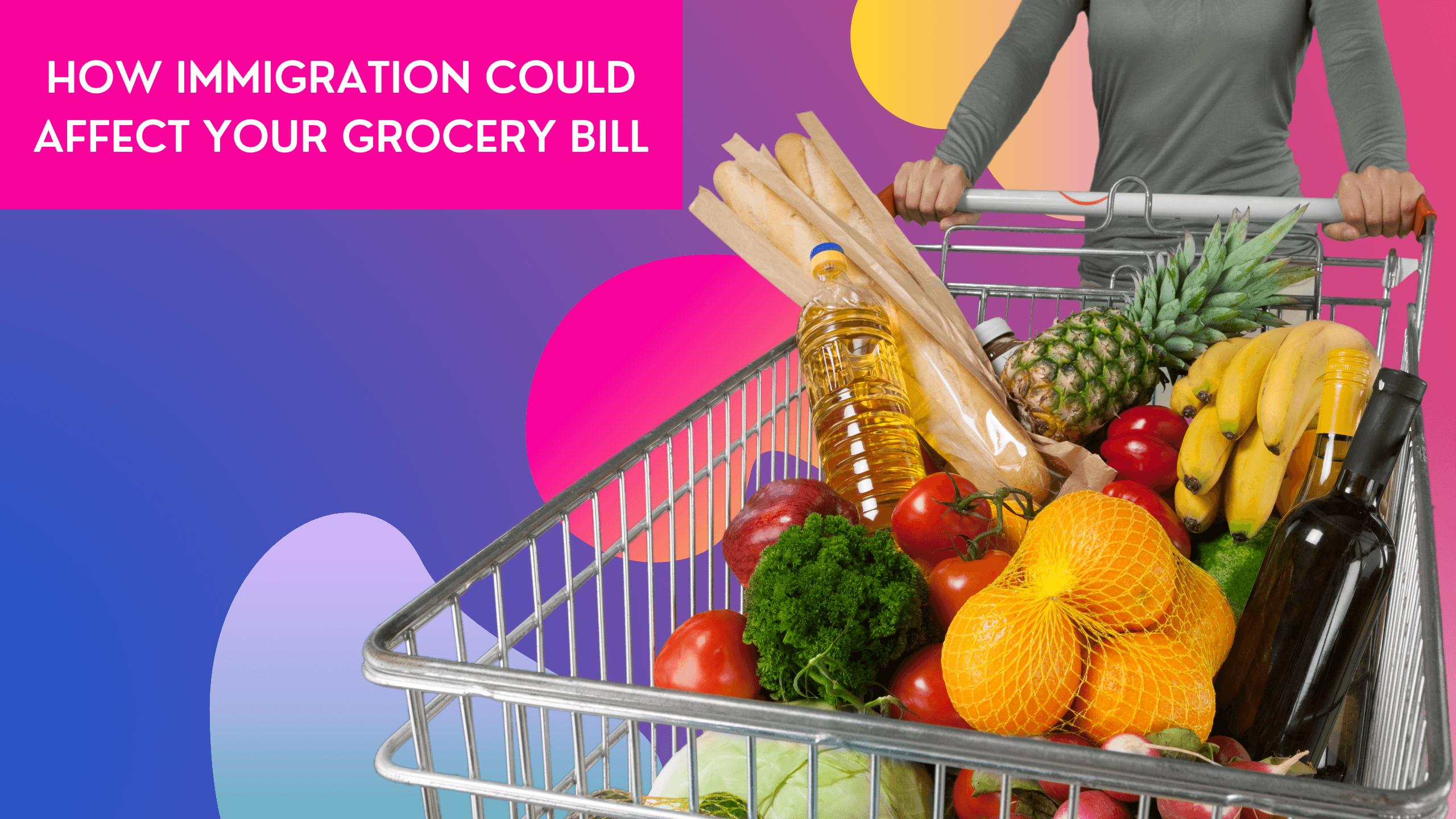
    How Immigration Could Affect Your Grocery Bill

    Today, the United States is home to the largest immigrant population in the world. While much immigration-related debate centers on social issues, immigration’s economic effects are clear-cut it increases potential economic output by increasing the size of the labor force.

    While inflation fears grip the U.S., the war in Ukraine has caused skyrocketing costs for farmers here. The price of agricultural chemicals such as fertilizers and pesticides has risen 50% over the past year, as Russia is a significant exporter of nitrogen, potassium, and phosphorous fertilizers. As a result, certain consumer goods are getting scarce, and meat and poultry are in short supply in many supermarkets. In addition, a combination of expensive crops to feed livestock and chickens, high transportation costs, and shortages of packaging materials may cause dairy shortages.

    In the last two years “over half the farmers responding to a recent Purdue University survey say they've faced labor shortages. Many say they've also had difficulty maintaining adequate qualified workforces.”

    Echoing the survey, Tyson Foods CEO Donnie King told quarterly earnings to call in February that “Customer demand continues to outpace our ability to supply products.” And labor shortages, as well as material shortages, may impact grocery shelves, with fewer transportation workers and grocery workers available to keep them stocked.

    While the correlation between the rising prices and immigration may not be apparent, less immigrant labor in the U.S contributes to price hikes. The health of America’s farms and of the entire agriculture industry is tied directly to immigration. As recently as 2019, 48.9 percent of all agricultural workers were foreign-born, and more than one-fourth were undocumented. In many states where agriculture is essential, immigrants make up even larger percentages of the farm workforce; in California, immigrants comprise more than 80 percent.

    The COVID-19 pandemic crippled the U.S. labor market, making it harder for all employers, farmers included. “We’ve seen how disruptions to the supply chain and a shortage of reliable workers have catastrophic impacts on businesses and entire industries. We’ve gotten a glimpse of what food shortages look like,” said Joel Anderson, executive director of the Snake River Farmers Association in Idaho. “We have seen bare shelves in our grocery stores.”

    Immigration reform would be a viable solution for this ongoing issue. The Farm Workforce Modernization Act, a bill passed by the House of Representatives in 2021, would provide a compromise solution by permitting farmworkers and their spouses and children to earn legal status through continued employment in the agricultural sector by making changes to the H-2A program. The program allows U.S. employers or U.S. agents who meet specific regulatory requirements to bring foreign nationals to the United States to fill temporary agricultural jobs. However, its timetable doesn’t allow recipients to work year-round — a problem for operations that need workers at all times of the year, like dairy farms. The proposed bill aims to fix this issue by creating a year-round option, more wage consistency, mandated housing for migrant workers, and a streamlined application process for employers.

    More workers would lead to more farm efficiency, decreasing the price of goods. During a time when the war in Ukraine is creating massive shortages and the U.S. is under increased pressure to keep up with the food demand, the already stressed agricultural labor market could greatly benefit from immigration reform.

    To learn more about this blog post, or if you have any other immigration concerns, please feel free to contact me at info@norris-law.com or (484) 544-0022.

    .

    NM PR
    Visit Profile

    Related Posts

    Are Visa Backlogs threatening the U.S. Economy? Immigrants are Falling Pray to Social Media USCIS Policies Lead to High Denial Rates for L-1B Petitions

    Share

    Tags

    #employers #General Immigration #Government

    Helpful links

    • About Us
    • News
    • Services
    • Blogs
    • Attorneys
    • Articles
    • (COVID-19)
    • Award Methodology
    • Events
    • Join Our Team
    Connect
    Online Payment

    Connect with Us

    • LinkedIn
    • Facebook
    • X
    • Instagram
    • Youtube

    Join our growing team

    We are looking for quality attorneys to help us do more for our clients. At Norris McLaughlin, each attorney has the same opportunity to succeed whether you’re at the beginning of a career or pinnacle of the profession.

    Learn More

    Subscribe to our content

    Receive timely legal information delivered to your inbox

    This field is for validation purposes and should be left unchanged.
    © , Norris McLaughlin, P.A., All Rights Reserved. Attorney Advertising.
    VIEW OUR DISCLAIMER,  TERMS OF USE,  AND PRIVACY POLICY

    We use cookies to ensure that we give you the best experience on our website. If you continue to use this site we will assume you consent to our cookie policy. Learn more